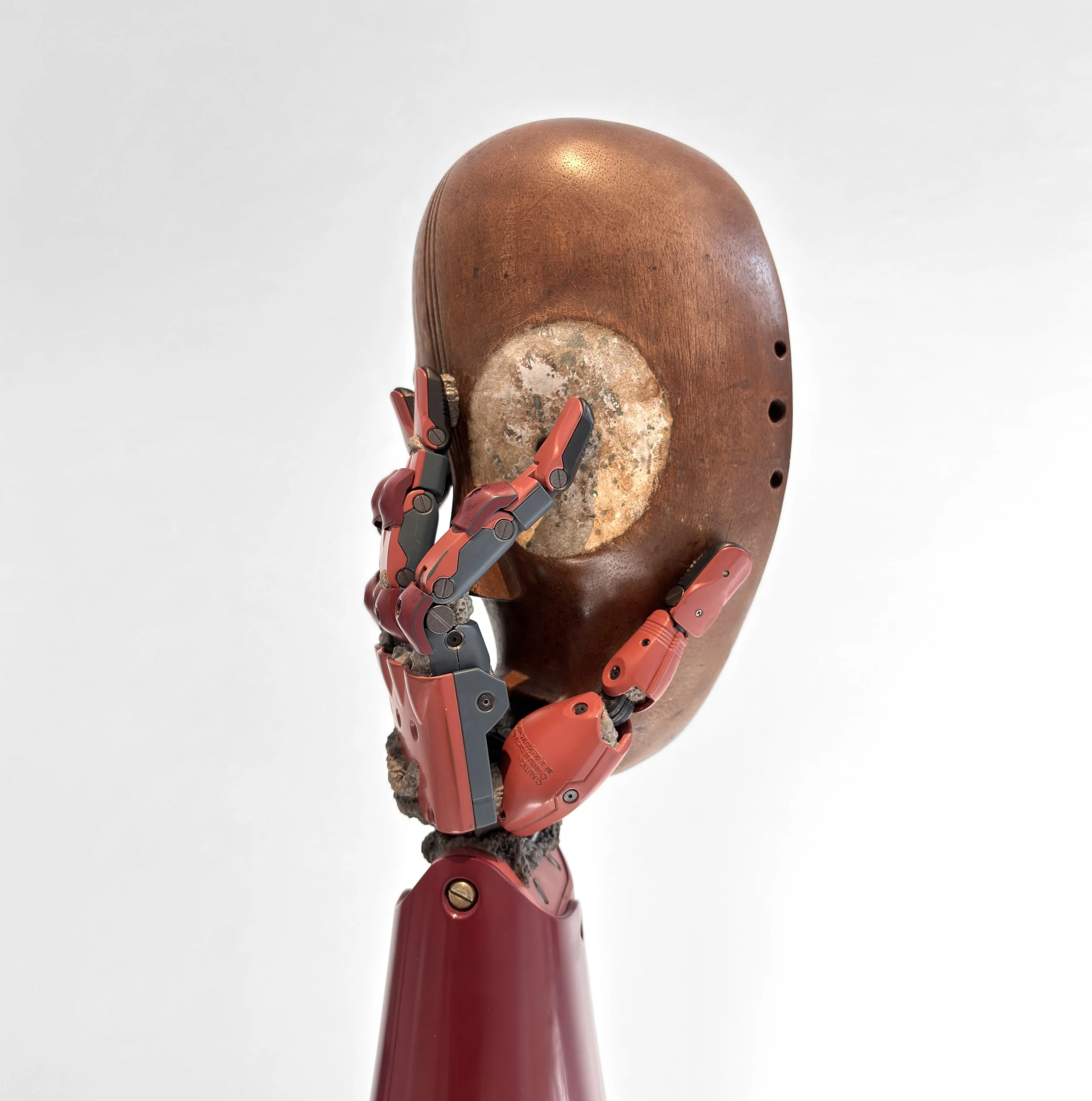
The Wound & The Ghost
A solo exhibition by Michael MacGarry
Everard Read Gallery, Johannesburg
25 June – 07 August 2026
Artist’s statement:
I have come to distrust any history that presents itself as complete. Completion is a rhetorical flourish masquerading as truth – our inheritance instead, is an accumulation of forces – pressures sedimented over time, contradictions unresolved, violences rearticulated in quieter forms. History does not conclude; it lingers, mutates and clings. Less as a record and more like a dense residue, refusing the clean edges we impose on it in textbooks, archives or national mythologies. The Wound & The Ghost emerges from this suspicion – not as an attempt to resolve it, but to sit with its discomfort and lightly squeeze where it continues to ache.
The works in this exhibition extend my ongoing Tontine series, which adopts as its conceptual armature a financial mechanism organised around collective investment and incremental death. In a tontine, participants enter into a shared contract whose ultimate logic is elimination: as members die, their share is redistributed among the survivors, until only one remains. Survival here is not incidental—it is the condition upon which value accrues. Death is not an interruption of the system; it is its engine.
It would be convenient to regard the tontine as a historical curiosity, an archaic artefact of speculative finance. But its logic persists in more insidious and less visible forms. What interests me is not the instrument itself, but the structure of thought it encodes: a willingness to organise life around differential endurance, to normalise the slow disappearance of certain bodies as the precondition for the flourishing of others. This is not aberration. It is a principle. Possibility paired with the exhilarating appeal of a mode of thinking entirely outside of the Newtonian universe. Within this framework, the figures of the wound and the ghost emerge not as metaphors applied after the fact, but as constitutive conditions. They do not illustrate the work; they organise it. They are less symbols than operations—ways in which time, memory, and embodiment are structured.
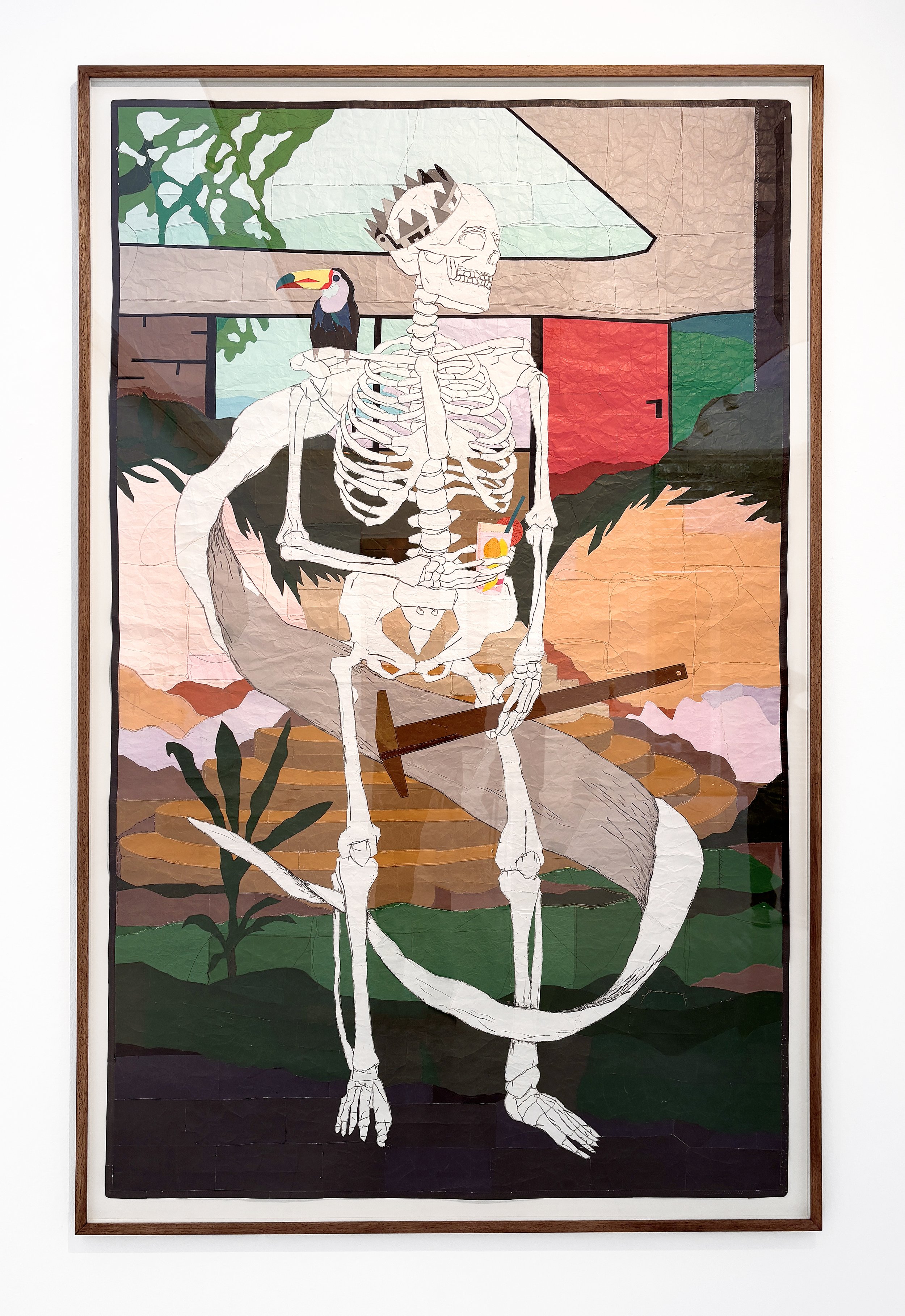
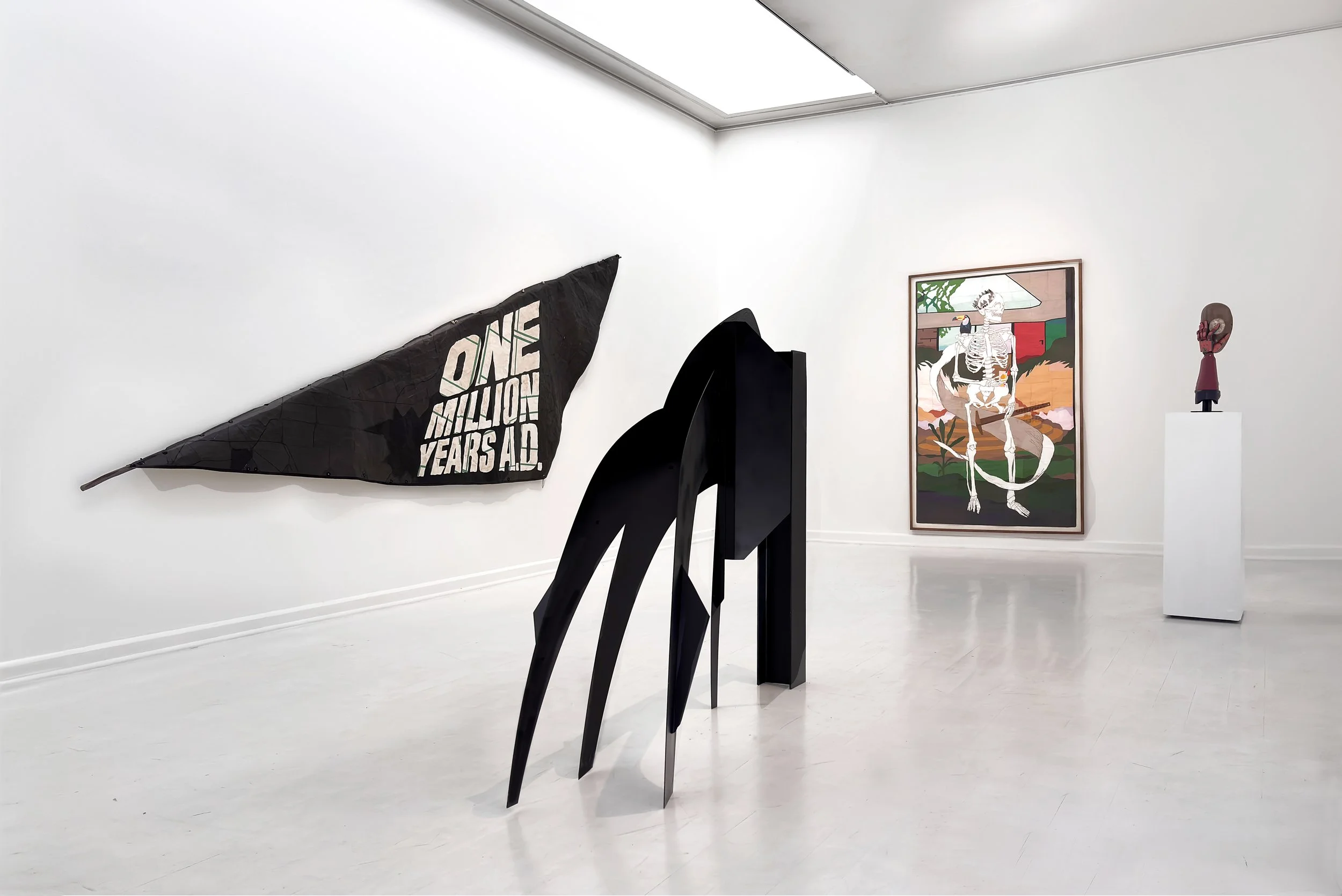
There is a tendency to treat the ghost as immaterial, as something spectral and therefore removed from the real. I resist this. The ghost is not outside materiality; it is embedded within it. It resides in the organisation of space, in the distribution of bodies, in the ways in which certain histories are rendered visible while others are suppressed. The ghost is what remains when resolution is declared prematurely. It is the remainder that refuses incorporation. While the relationship between wound and ghost is recursive. The wound produces the ghost, which in turn reactivates the wound. This loop does not close. It sustains itself through difference, through displacement. Each iteration is altered, but the structure persists. There is no final reconciliation, no moment at which the system resolves into equilibrium. And It is within this loop that the figures in these works operate. The skeleton, as an image, is often mistaken for a universal sign – a reduction of the body to its most neutral form. But neutrality is a fiction. The skeleton is not empty; it is charged. It carries with it the residue of the body it once structured, even as it appears to have been stripped of identity. In this exhibition, the skeleton is not arbitrary in scale. It is not a symbolic abstraction detached from the body that produced it. The skeleton in the work Haunted by Modernism – is measured precisely against my own physical dimensions, it corresponds to my height, my proportions—an exact anatomical equivalence. Beyond trivial metrics, this detail hopes to collapse representation and embodiment – moving the figure beyond generalised representation of mortality, into a direct index of my own corporeal limits.
The humour in this body of my work is of a particular kind, centred on the idea that to take the work entirely seriously would be to risk reproducing the very solemnity that allows certain forms of violence to go unquestioned. The wry, the darkly comic, the absurdity of gallows humour – are all tools for destabilisation. They are also coping mechanisms in the face of celluar-level pain. Yet, there is a danger in conflating the personal with the structural, in assuming that individual experience can stand in for and stand up to, broader historical processes. The works in this exhibition attempt to hold this tension without resolution, to move between scales and registers – to deny the graft – maybe allowing the wound and the ghost to operate simultaneously as narrative devices, historical conditions, and as sites of personal experience.
In this sense, the exhibition is less a statement than a proposition. It suggests that the wound and the ghost are not aberrations to be corrected, but conditions to be understood – however partially, always provisionally – with an awareness that the stories we tell about ourselves – both individually and collectively – are shaped as much by what we are unable to resolve as by what we are.
And perhaps that is where the work finds its modest ambition: not in healing wounds or exorcising ghosts, but in refusing to let them disappear into abstraction. Insisting, instead, on their continued presence – awkward, unresolved, and – for that very reason – impossible to ignore. The wound is forever, and the ghost is just getting comfortable.
Haunted by Modernism
Salvaged packaging paper, cotton, archival tape
1 352 x 2 095 mm
2026
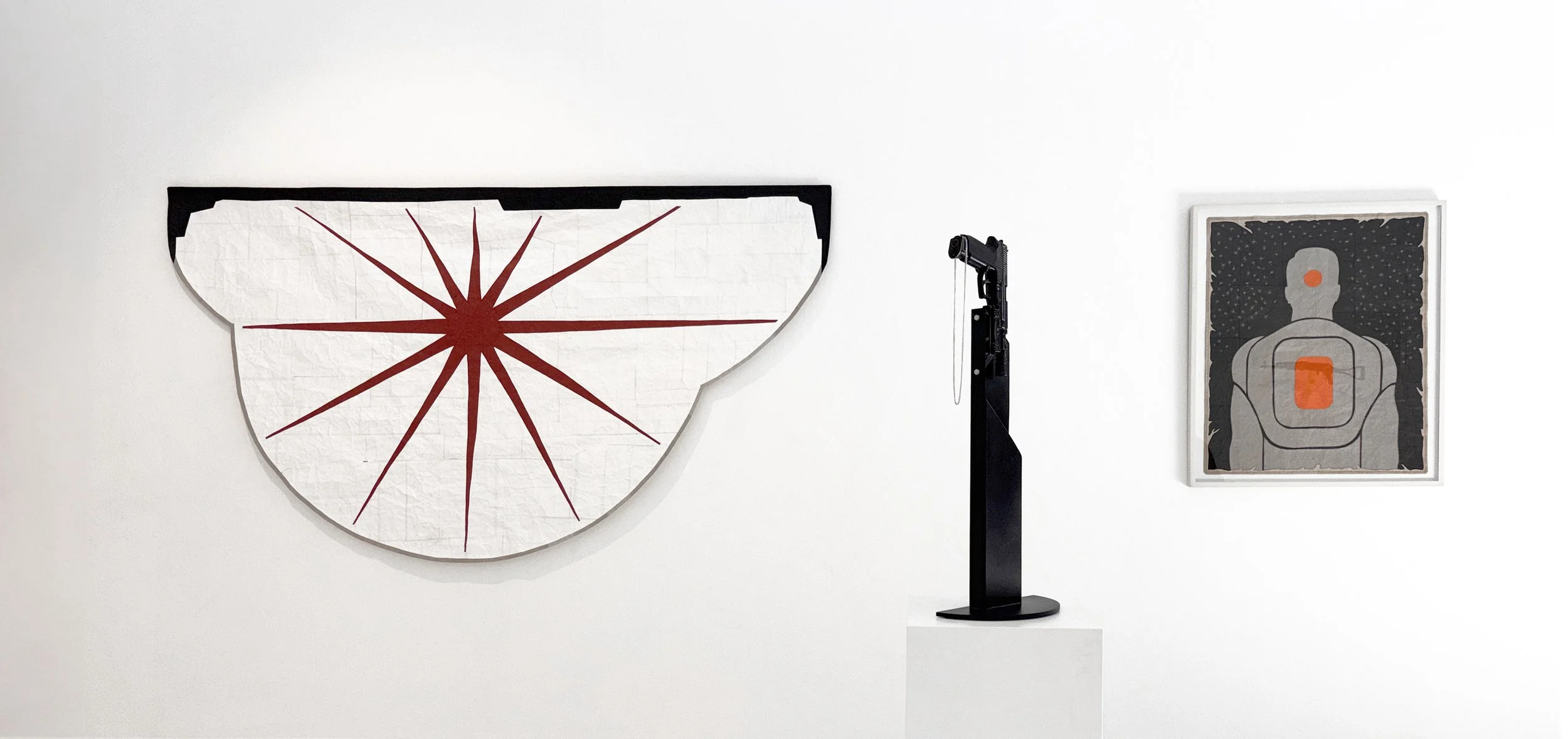
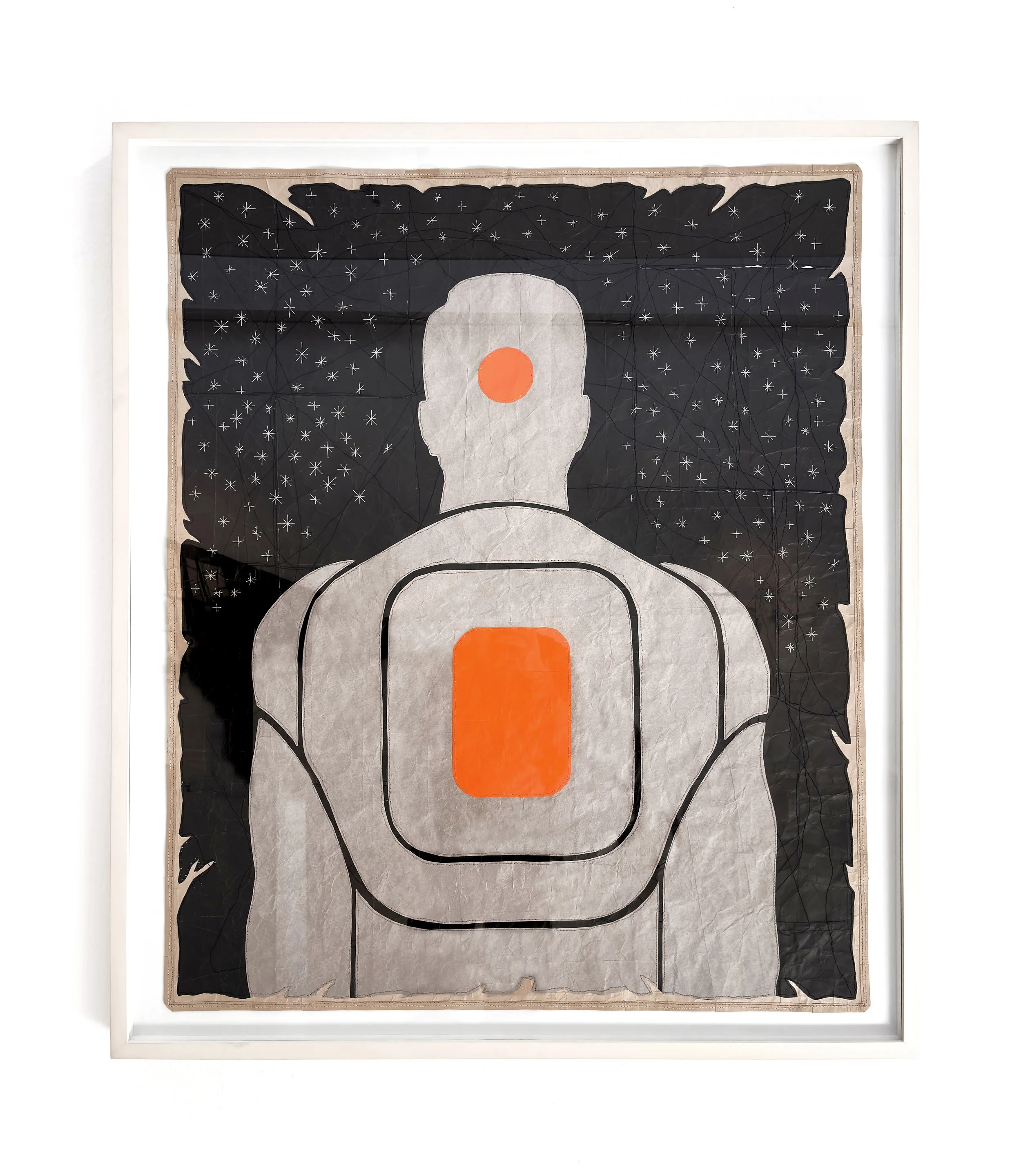
Outside of causality
Salvaged packaging paper, cotton, twine, archival tape
950 x 790 mm
2026
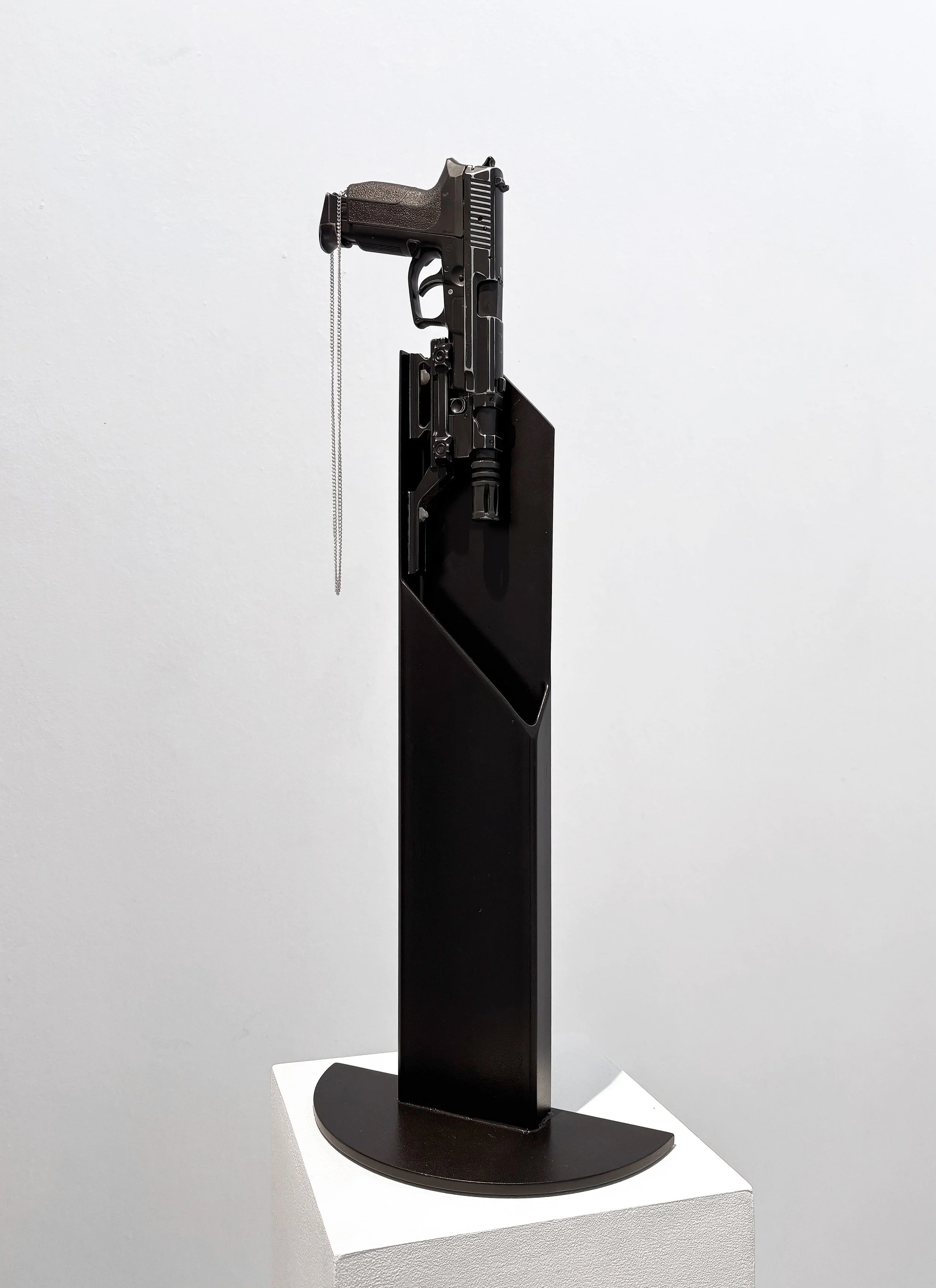
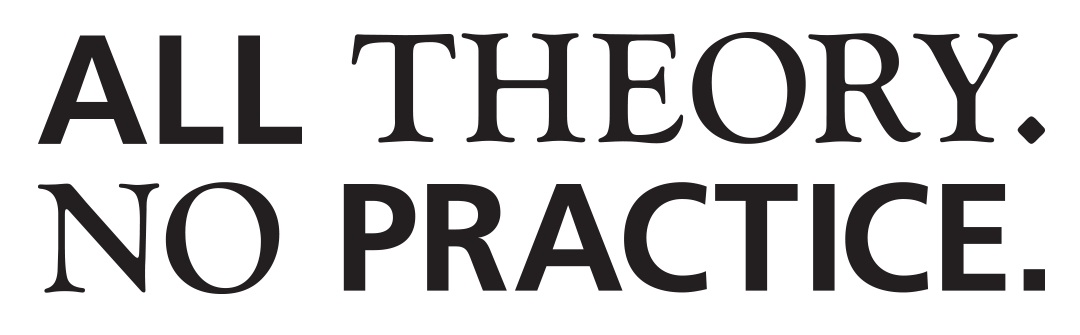
In numbers, and letters, it spelt out his new life.
Mild steel, found objects, quartz, poly-urethane
772 x 315 x 208 mm
2026
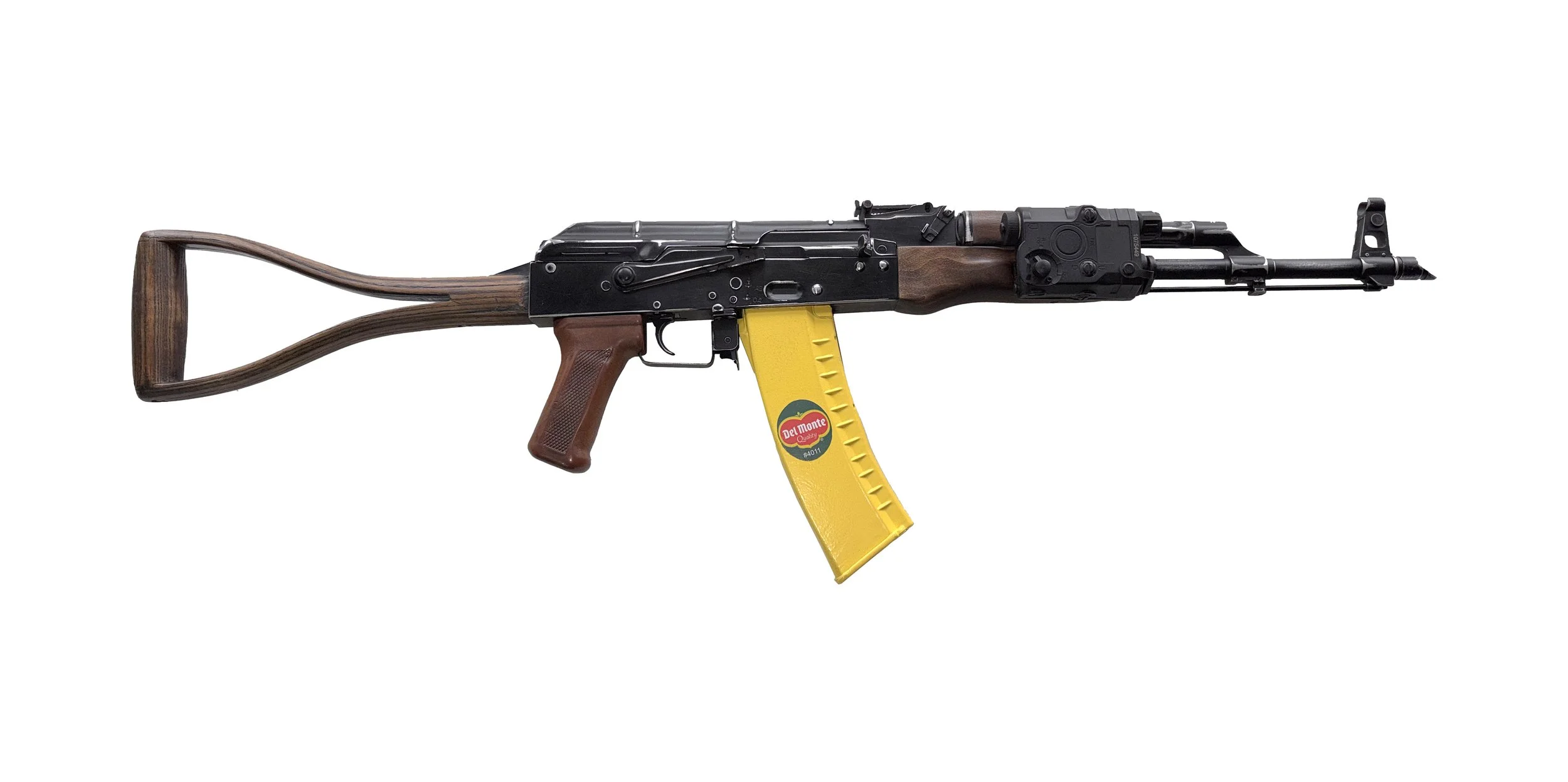
Existential-adjacent
Found objects
580 x 210 x 235 mm
2026